Hatha yoga is a branch of yoga that focuses on physical postures (asanas) and breathing techniques (pranayama) to build strength, flexibility, and a calm, focused mind. The word "hatha" can be translated as "force" or "willful," and it traditionally describes the more physical, body-based path of yoga — as opposed to the purely meditative and introspective styles.
Believed to have originated in India over a thousand years ago, Hatha yoga is today one of the most widely practised forms of yoga in the world. At its heart it is a discipline that unites body, mind, and breath, preparing the practitioner for deeper stages of meditation.
#What Does "Hatha" Mean?
#Ha + Tha: The Sanskrit Meaning Behind Hatha Yoga
To truly define hatha, look at the Sanskrit word itself. "Hatha" is a compound of two syllables: "ha," meaning sun, and "tha," meaning moon. In yogic anatomy, "ha" corresponds to pingala nadi, the solar energy channel linked to heat, activity, and the body's right side, while "tha" corresponds to ida nadi, the lunar channel linked to coolness, receptivity, and the left side. Understood this way, the hatha yoga definition is less about brute physical effort and more about union — yoking two opposing currents of prana (life force) into one balanced flow through the spine's central channel, sushumna nadi.
Some later commentators also translate the Sanskrit word "hatha" more literally as "force" or "willful effort," pointing to the discipline the physical practice demands. Both readings are accurate and complementary: hatha yoga is the deliberate, effortful path that ultimately produces balance between the sun and moon energies within the body.
In Sanskrit, "ha" represents the sun and "tha" represents the moon. Hatha therefore symbolises the union of two opposing energies within us — the active, heating solar force and the calm, cooling lunar force. The practice works to balance these energies through posture and breath, creating harmony in the body and steadiness in the mind. This is why "hatha" is often translated as "force": it is the willful effort applied to bring body and breath under conscious control.
#The Core Components of Hatha Yoga
#Core Hatha Yoga Asanas Every Practitioner Should Know
Hatha yoga builds strength, flexibility, and body awareness through a set of foundational yoga asanas — physical movements and postures held steadily with conscious breath rather than rushed through. Here are some of the core yoga poses you'll encounter in almost any hatha yoga class:
- Tadasana (Mountain Pose) — grounds the feet and aligns the spine; the reference point for most standing yoga postures.
- Trikonasana (Triangle Pose) — stretches the hamstrings and side body while building balance and focus.
- Bhujangasana (Cobra Pose) — opens the chest and strengthens the lower back, a core backbend in most sequences.
- Paschimottanasana (Seated Forward Bend) — lengthens the spine and hamstrings while calming the nervous system.
- Adho Mukha Svanasana (Downward-Facing Dog) — a full-body stretch that builds shoulder and leg strength.
- Shavasana (Corpse Pose) — the closing relaxation pose that lets the body absorb the practice's benefits.
Each posture is practiced with careful attention to alignment and breath, making hatha yoga an ideal entry point into the broader world of yoga poses and asanas.
Classical texts such as the Hatha Yoga Pradipika describe a complete system rather than a single set of exercises. A traditional practice draws on several interconnected limbs:
- Asana (postures): physical poses that stretch and strengthen the body, improve flexibility and balance, and prepare you to sit comfortably for meditation.
- Pranayama (breath control): breathing exercises such as deep breathing, alternate-nostril breathing, and breath retention that calm the mind and improve concentration. You can explore specific techniques in our guide to pranayama and its benefits.
- Shatkarma (cleansing): six purification practices — such as neti, dhauti, and kapalabhati — that detoxify the body and clear the energy channels.
- Mudra & Bandha (seals & locks): subtle gestures and internal locks used to direct and conserve prana (life energy) within the body.
- Dhyana (meditation): the quiet, focused awareness that the physical practices are ultimately designed to support.
Together these components make Hatha a holistic practice — one that works on the physical, mental, and energetic levels at the same time.
#Hatha Yoga History
#Where Hatha Yoga Comes From: Origin and Classical Texts
The hatha yoga origin traces back to medieval India, emerging from the Nath yogi tradition founded by Matsyendranath and his disciple Gorakhnath, active roughly between the 9th and 11th centuries CE. These wandering ascetics systematized physical postures, breath control, and internal cleansing techniques as tools to prepare the body for deeper meditation and spiritual awakening — a significant shift from the purely seated, contemplative yoga described in earlier texts like the Yoga Sutras.
The most influential scripture on traditional hatha yoga is the Hatha Yoga Pradipika, composed by Swami Svatmarama in the 15th century. It codifies asanas, pranayama, mudras, and shatkarmas (cleansing practices) into a complete system for awakening kundalini energy. A second key text, the Gheranda Samhita (17th century), expands this into a sevenfold path covering purification, posture, and meditation. Together, these classical texts form the philosophical backbone of the hatha yoga practice still taught in lineage-based schools across Rishikesh today.
The exact origins of this tradition are unclear, but it is believed to have grown out of the Natha yogic lineage of medieval India, associated with masters such as Matsyendranath and Gorakhnath. The practice was later systematised in the 15th-century text the Hatha Yoga Pradipika, compiled by Swami Swatmarama, which remains one of the most important classical manuals to this day.
The discipline was popularised in the West during the 20th century by teachers such as Swami Sivananda and Tirumalai Krishnamacharya, who brought it to the United States and Europe. In the decades since, it has become one of the most popular styles practised worldwide, taught in yoga studios, gyms, and community centres everywhere. Many modern practitioners deepen their study through a structured 200-hour Yoga Teacher Training in Rishikesh, where the classical roots of the practice are taught alongside anatomy and teaching skills.
#Hatha Yoga Benefits
Regular practice offers a wide range of benefits, both physical and mental. The main physical benefits include:
- Improved flexibility and balance: a wide range of postures stretch and strengthen the muscles and joints, gradually improving mobility.
- Increased strength: many poses require stability and effort, building strength in the muscles and core over time.
- Better cardiovascular function: more dynamic sequences gently raise the heart rate and support heart health.
- Stress relief: deep breathing and relaxation lower tension and calm the nervous system.
The main mental and emotional benefits include:
- Sharper concentration: focusing on the breath and the present moment trains the mind to stay steady.
- Reduced anxiety and low mood: the relaxation techniques help ease stress, anxiety, and mild depression.
- Improved sleep: by relaxing both mind and body, the practice supports deeper, more restful sleep.
In short, Hatha yoga is a holistic practice that unites body, mind, and breath. It is a low-impact form of exercise suitable for people of all ages and fitness levels, and a proven way to improve overall well-being.
#Hatha Yoga vs Vinyasa and Other Styles
Strictly speaking, almost every modern posture-based style — including Vinyasa, Ashtanga, and Iyengar — is a form of Hatha yoga, since they all work with asana and pranayama. In practice, however, a class labelled "Hatha" usually moves at a slower, gentler pace: poses are held for several breaths with an emphasis on alignment and steady breathing. Vinyasa, by contrast, links postures into a continuous, flowing sequence set to the breath. If you are new to yoga or prefer a calmer, more deliberate pace, a Hatha class is often the ideal starting point.
#What Does a Typical Hatha Yoga Class Look Like?
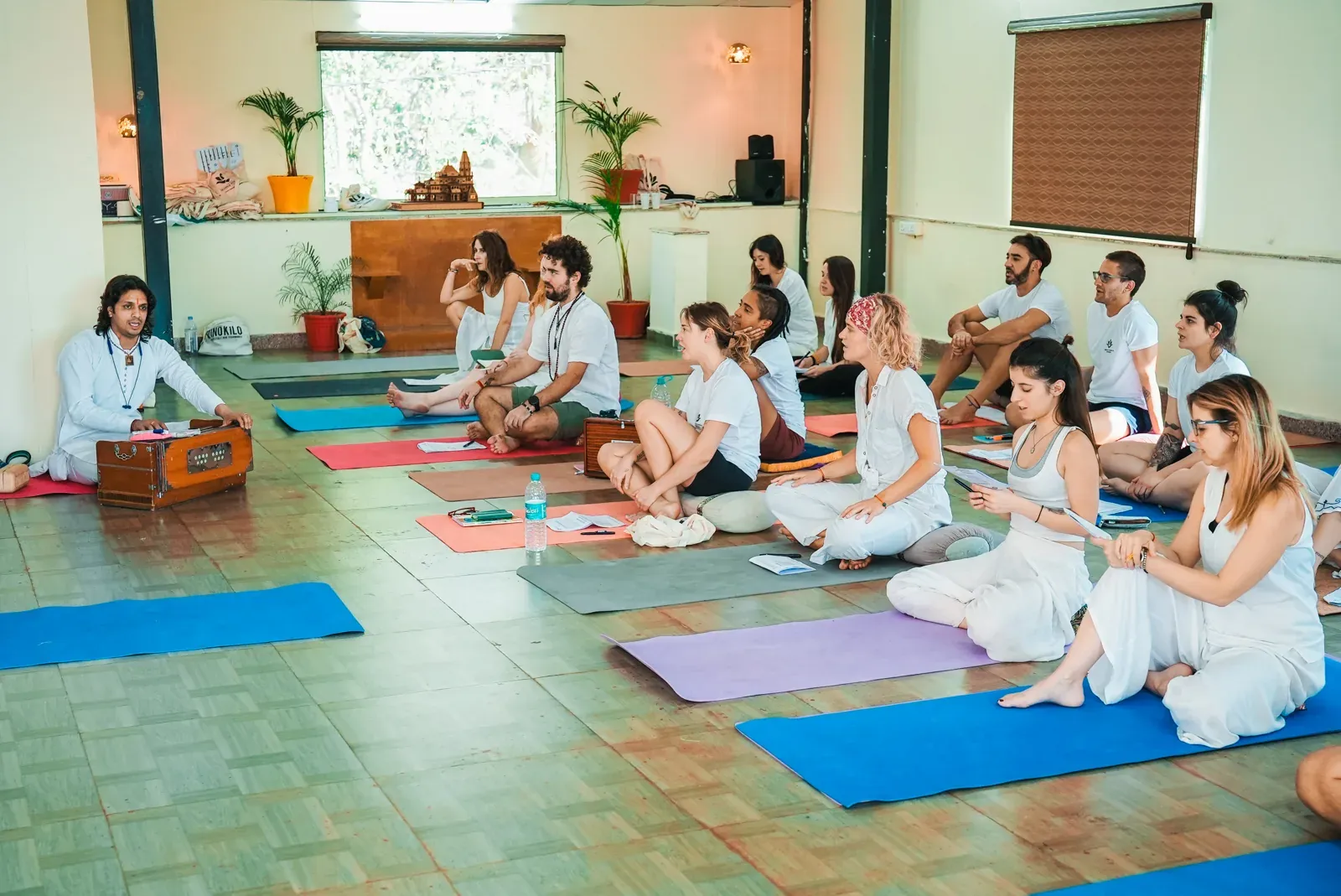
If you're wondering what to expect from a hatha yoga class, the structure is usually gentle, methodical, and predictable — one reason it's often recommended over faster-paced styles like vinyasa yoga. A typical hatha yoga practice moves through five broad stages:
- Centering — a few minutes of seated stillness to settle the mind and set an intention.
- Pranayama — breathing exercises such as ujjayi or nadi shodhana to prepare the nervous system.
- Warm-up — gentle joint rotations and stretches to ready the muscles for deeper work.
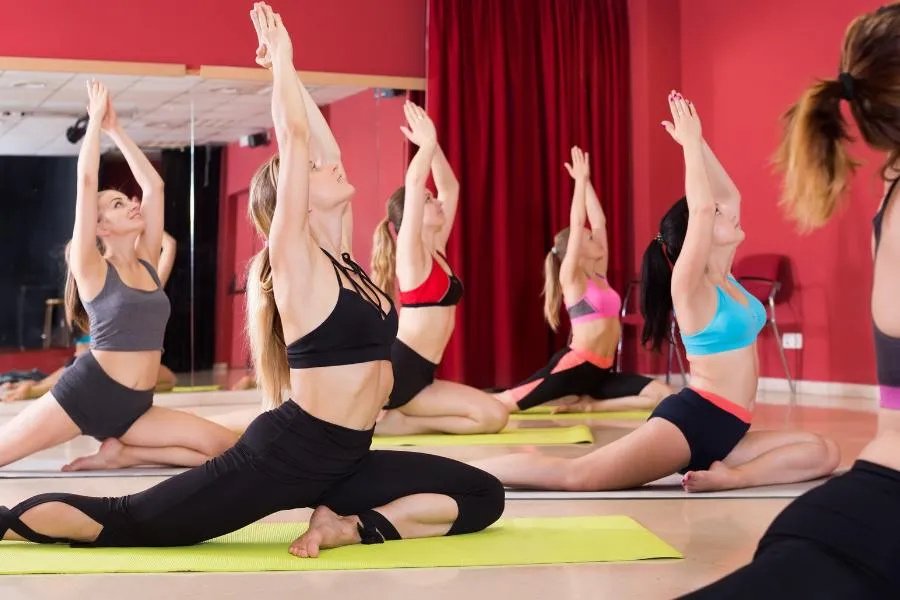
- Asana sequence — a series of yoga poses held for several breaths each, moving through standing, seated, and supine postures.
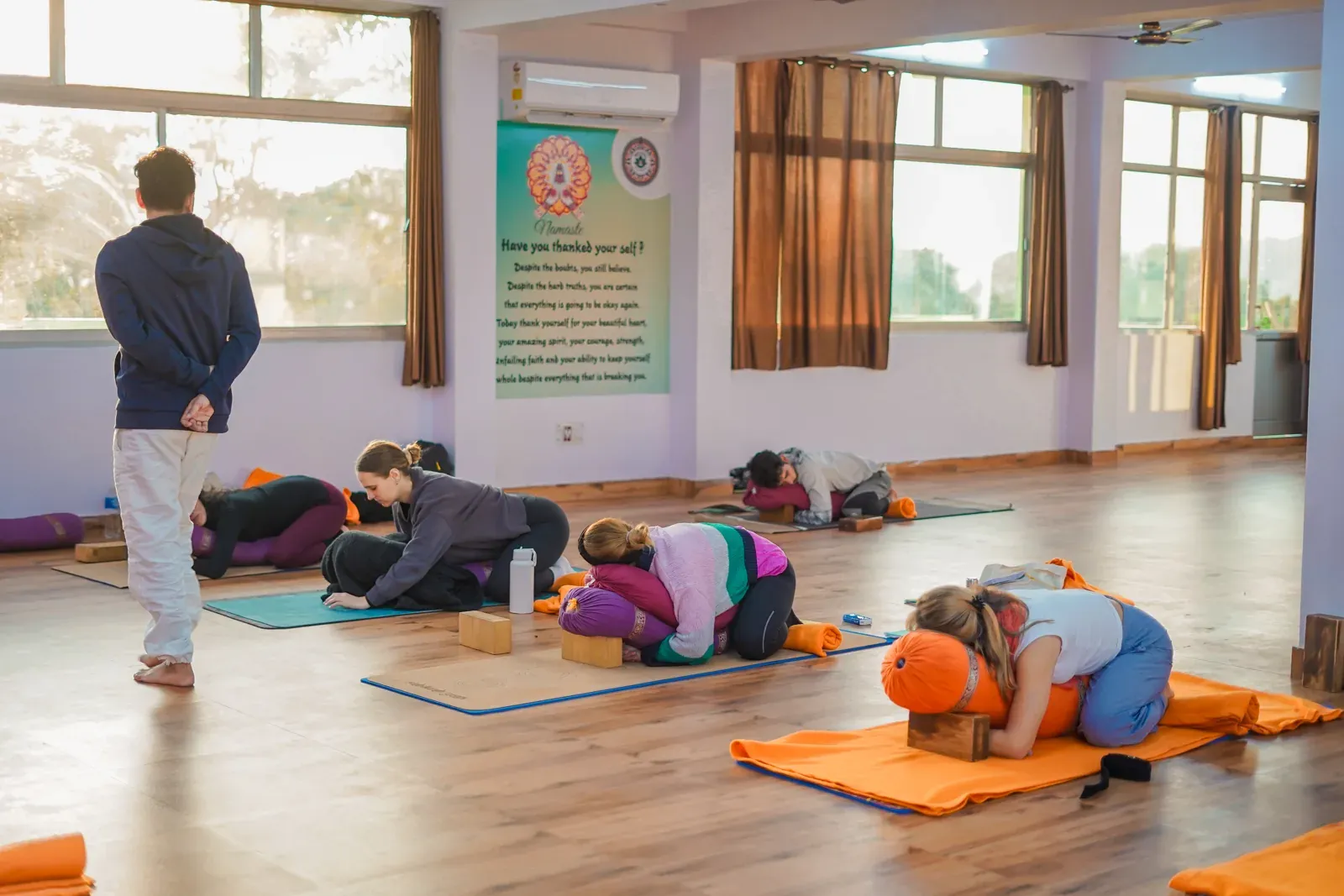
- Relaxation and meditation — closing in Shavasana, often followed by a short meditation.
Unlike vinyasa yoga, where postures flow continuously with the breath, a hatha yoga class holds each shape longer, making correct alignment easier for beginners to learn. Most yoga classes in this style run 60–90 minutes and welcome all levels of experience.
#Is Hatha Yoga Good for Beginners?
Yes — its slower pace and focus on fundamentals make it one of the most beginner-friendly styles. Because postures are held longer, you have time to learn correct alignment and connect movement with breath. Working with a qualified, experienced teacher is important, as proper technique keeps the practice both safe and effective. Beginners who want to build a strong foundation often start with a focused 100-hour yoga teacher training before progressing further.
#Frequently Asked Questions (FAQ)
#What is Hatha yoga in simple words?
Hatha yoga is a style of yoga that combines physical postures with breathing exercises to make the body strong and flexible and the mind calm and focused. It is the foundation that most other modern yoga styles are built on.
#Is Hatha yoga suitable for beginners?
Absolutely. Its slower pace and longer-held poses give beginners time to learn alignment and breathing safely, making it one of the best entry points into a regular yoga practice.
#What is the difference between Hatha and hot yoga?
Hatha refers to the traditional, balanced practice of postures and breathwork performed at room temperature. Hot yoga is practised in a deliberately heated room to increase sweating and flexibility, and is usually more physically intense.
#How often should you practise Hatha yoga?
Even two to three sessions a week can bring noticeable improvements in flexibility, strength, and stress levels. A short daily practice is ideal, but consistency matters far more than duration.
Ready to take your practice further?Mimamsa Yogshala is a Yoga Alliance accredited yoga school in Rishikesh, and our Yoga Teacher Training programs are a proven entry point into a successful teaching career. Join a future batch and become a certified professional yoga teacher. Apply here, or give us a call at +91 8859221330.